This article is general legal information, not legal advice. Personal injury law varies significantly from state to state, and every case turns on its own facts. Nothing here creates an attorney-client relationship, and no outcome is promised or implied. Consult a licensed attorney in your state before making decisions about your claim.
Any experienced motorcycle accident lawyer will tell you the same thing: the crash is only half the case. The other half is a set of assumptions that arrive before anyone has looked at the evidence — that the rider was going too fast, weaving, showing off, or taking a risk a “normal” driver would not. Those assumptions live in adjusters, in jurors, and sometimes in the responding officer’s narrative. They are rarely stated out loud. They shape the file anyway.
This is a real, measurable problem in rider claims, and it is beatable. But it is beaten with objective, physical evidence, not with indignation. What follows is how that bias operates and what actually rebuts it.
Where the Bias Comes From
Most people evaluating a motorcycle claim have never ridden. Their reference points are the rider who split lanes past them on the freeway and the group that went by loudly at 2 a.m. Nothing in their experience includes the commuter riding a well-maintained bike at the speed limit in full gear on a Tuesday morning.
That gap produces a set of default beliefs:
- Riders choose danger, so a rider who gets hurt accepted the risk.
- Severe injuries imply high speed, because a careful rider would not be hurt that badly.
- Motorcycles are hard to see, so a collision is partly the rider’s fault for being invisible.
- The absence of a helmet means recklessness, regardless of what the law requires or what body part was injured.
- Any modification, any loud pipe, any sport bike equals an aggressive rider.
Every one of those is a leap, and each shows up in claim handling as a comparative fault percentage that no evidence supports. The adjuster does not write “we discounted 30% because he rides a motorcycle.” The adjuster writes “liability is unclear” and offers accordingly.
How it shows up in practice
- An early offer that treats a clear-liability collision as if fault were split.
- Heavy focus in recorded statement requests on the rider’s speed, gear, and riding history rather than the driver’s conduct.
- Police narratives that record the driver’s account first and treat the rider’s account as a rebuttal, particularly when the rider was transported before giving a full statement.
- Defense medical opinions attributing injury severity to “the nature of motorcycle riding” instead of to the impact.
- Jury questionnaires and voir dire where a meaningful share of the panel volunteers negative views of riders.
The Left-Turn Collision: The Most Common Fact Pattern
The signature motorcycle crash is a driver turning left across the path of an oncoming rider — at an intersection, into a driveway, or across a lane of traffic. The driver’s account is nearly always some version of “I looked and he wasn’t there,” followed by “he must have been flying.”
Two well-documented perceptual phenomena explain that honestly held mistake. Motorcycles present a narrow frontal profile, which makes distance and closing speed hard to judge — a small object far away and a small object approaching fast look similar for a critical fraction of a second. And drivers scanning for gaps are looking for car-shaped objects; a motorcycle can fall into the visual blind spot created by an A-pillar or simply not register as a hazard.
None of that excuses the driver, and no motorcycle accident lawyer should let it be treated as an excuse. A driver turning left generally owes a duty to yield to oncoming traffic and to actually see what is there to be seen. But it explains why the driver believes their own version, and why “he was speeding” is asserted so confidently by someone who never saw the bike at all.
What tends to disprove the speeding narrative
- Damage geometry. The crush pattern on the car, the deformation of the forks, and the location of impact on the vehicle constrain the possible closing speeds.
- Throw distance. Reconstructionists use established relationships between rider and motorcycle throw distance and impact velocity. The numbers are often far lower than the driver’s estimate.
- Scrape and gouge marks. Physical roadway evidence fixes the point of impact and the post-impact travel path.
- The car’s event data recorder. Passenger vehicles record pre-impact speed and braking; if the driver claims to have been stopped and creeping, the data may say otherwise.
- Signal timing records. Municipal signal phasing data can establish who had the green and for how long.
- Video. Intersection cameras, transit bus cameras, dash cameras in following vehicles, and business exterior cameras. Retention windows are short, which is why preservation demands go out immediately.
- Helmet camera or GPS ride-tracking data if the rider used either.
Lane Position and Sight Lines
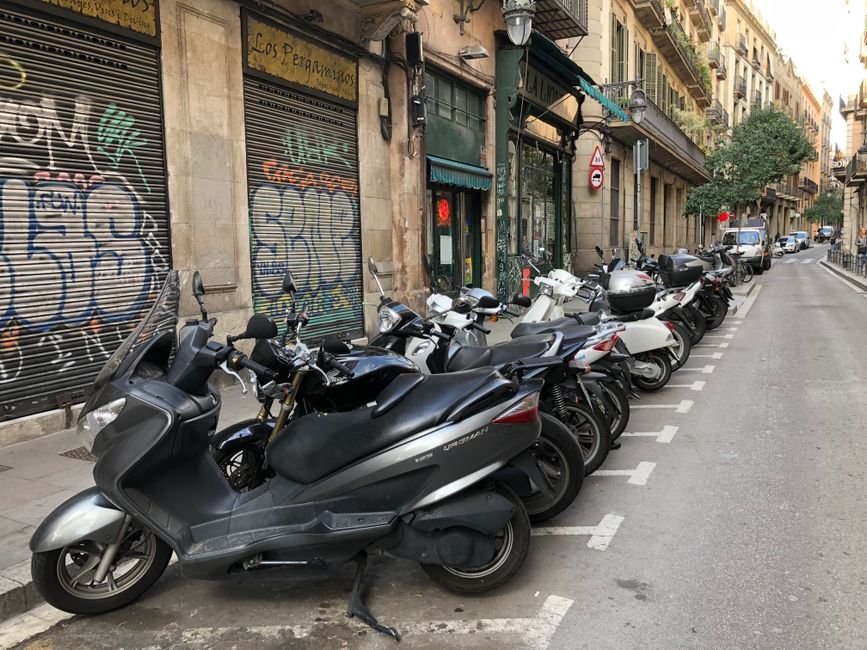
Experienced riders think constantly about lane position — where in the lane they sit and what that buys them in visibility, escape routes, and reaction time. Adjusters and jurors have no idea this discipline exists, and that ignorance is exploitable in both directions.
Establishing that a rider was in the left third of the lane approaching an intersection, with headlight on, in high-visibility gear, at posted speed, converts an abstract “hard to see” argument into a concrete one: the rider did everything available to be seen, and the driver still failed to look. A photograph taken from the turning driver’s eye height, at the driver’s stopping position, showing an exemplar motorcycle at the rider’s actual approach distance, is frequently the most persuasive single exhibit in the file. It answers the “I couldn’t see him” defense with an image rather than an argument.
Sight line documentation worth capturing early
- Photographs from the driver’s seated eye height at the actual turn position.
- Views at multiple distances corresponding to the rider’s approach.
- Obstructions present at the time — parked vehicles, foliage, sign placement, sun angle for the time of day.
- The same scene at the same hour and season, since lighting and vegetation change.
- Roadway grade and curvature, which affect what is visible from where.
Helmet Use: A State-by-State Legal Question, Not a Moral One
Helmet arguments deserve careful handling because the law here is genuinely fragmented and the defense will use whatever the local rule allows.
States fall into roughly three groups: universal helmet laws requiring all riders to wear one; partial laws applying to riders under a certain age or those carrying less than a specified amount of medical coverage; and a small number of states with no adult helmet requirement at all. Separately — and this is the part that matters legally — states differ on whether the absence of a helmet may even be mentioned in a civil case. Some jurisdictions bar the evidence outright. Some allow it only on damages, not liability. Some permit a comparative fault reduction for injuries a helmet would have prevented.
| State approach | Effect on the civil claim | Practical consequence |
|---|---|---|
| Helmet evidence excluded by statute or case law | Non-helmet use cannot be argued to reduce recovery | Move early to exclude any mention of it |
| Admissible only as to specific damages | May reduce head-injury damages, not liability | Requires medical proof of what a helmet would have changed |
| Admissible as comparative fault | Can reduce the overall award | Expert testimony on helmet efficacy becomes central |
| Universal helmet law, rider wore one | Removes the argument entirely | Document the helmet, its certification, and its damage |
One practical point riders overlook: keep the helmet. A cracked helmet is physical evidence of impact forces and of compliance. It gets thrown away astonishingly often, along with the jacket, boots, and gloves that would have shown the same thing.
Severity of Injury Is Not Evidence of Speed
The most damaging assumption in rider claims is the one that feels most intuitive: these injuries are catastrophic, therefore the impact must have been extreme, therefore the rider was going too fast.
The actual explanation is structural. A car occupant is surrounded by a crush zone, restrained by a belt, cushioned by airbags, and kept inside the vehicle. A rider has none of that. The energy of even a moderate-speed collision transfers directly to the body, and then there is a second event — contact with the roadway or a fixed object — that a car occupant never experiences. Below-freeway speeds routinely produce open fractures, degloving injuries, pelvic and spinal trauma, and traumatic brain injury.
Making that point credibly requires more than assertion, and it is a standard part of what an experienced motorcycle accident lawyer builds into the file. A biomechanical or reconstruction expert explaining energy transfer, supported by physical evidence establishing an actual impact speed, breaks the chain of inference. Once a jury understands that a 35 mph collision can amputate a leg, the severity of the injury stops functioning as circumstantial proof of recklessness.
Building the Case: A Practical Checklist
- ☐ Preserve the motorcycle in post-crash condition; do not let the insurer salvage it before inspection.
- ☐ Preserve the helmet, jacket, gloves, boots, and any damaged gear.
- ☐ Photograph all gear and clothing, including reflective elements and color.
- ☐ Confirm the headlight and taillight were functional; many bikes run headlights automatically.
- ☐ Send video preservation demands to nearby businesses within days.
- ☐ Request the other vehicle’s event data recorder download before repair.
- ☐ Obtain municipal signal timing and roadway maintenance records where relevant.
- ☐ Document sight lines from the driver’s actual position and eye height.
- ☐ Collect the rider’s training records — MSF course completion, endorsement history, clean record.
- ☐ Identify witnesses independent of both parties, including riders who stopped at the scene.
- ☐ Photograph injuries over time, especially road rash and surgical sites as they heal.
The rider training point is underrated. A completed safety course, a proper endorsement, years without a citation, and a well-maintained bike collectively describe a careful person. That profile does not prove what happened on the day, but it directly contradicts the mental image the other side is relying on.
What to Ask a Motorcycle Accident Lawyer
- How many motorcycle cases has this firm handled, as opposed to auto cases generally?
- Does anyone at the firm ride, and do you use riding experts?
- What is your approach to jury selection on rider bias?
- Which reconstructionists have you worked with on two-wheel collisions specifically?
- How does our state treat helmet evidence in a civil case?
- Will you preserve the bike and gear, and where will they be stored?
- Have you tried a motorcycle case to verdict?
Rider bias is also a reason trial capability matters more here than in an average auto claim. Carriers know a rider case carries jury risk in both directions, and their willingness to price a file fairly depends partly on whether the firm across the table has actually put one in front of a jury.
Frequently Asked Questions
Are motorcycle riders automatically blamed for crashes?
Not legally, but they frequently face an assumption of fault that has to be actively rebutted with physical evidence and reconstruction rather than testimony alone.
I wasn’t wearing a helmet. Does that end my claim?
It depends heavily on the state. Some jurisdictions bar helmet evidence in civil cases entirely, others allow it only as to certain damages, and others permit a comparative fault argument. It also depends on whether the injuries were head injuries at all.
The driver says I was speeding. How is that disproven?
Through objective evidence — damage geometry, throw distance analysis, roadway scrape marks, the other vehicle’s event data recorder, and available video. Driver speed estimates of a vehicle they never saw carry limited weight against physical data.
Does lane splitting hurt my case?
It depends entirely on the jurisdiction. A few states permit lane splitting or lane filtering under defined conditions; most do not address it or prohibit it. Legality shapes the comparative fault analysis.
Why do insurers value motorcycle claims lower at first?
Early evaluations often build in an unstated fault discount based on assumptions about riders. Documented liability evidence is what moves that number.
Should I keep my damaged gear?
Yes. Helmet, jacket, gloves, and boots are physical evidence of impact forces and of the protective steps you took. Photograph everything before anyone disposes of it.
Does my own motorcycle insurance matter if the other driver was at fault?
It can. Uninsured and underinsured motorist coverage may apply, and coverage rules for motorcycles sometimes differ from auto policies within the same company. Check the declarations page.
Final Thoughts
Rider bias is not paranoia and it is not an excuse. It is a predictable feature of how these claims get evaluated, and predictable problems can be prepared for. The response is not to argue that riders are misunderstood. It is to make the file so concrete that assumption has nowhere to sit — a measured sight line photograph, a throw-distance calculation, an EDR readout, a helmet with a certification sticker and a crack in it.
If you ride, two habits pay for themselves. Keep your training and maintenance records where you can find them, and consider a camera. If you have already been hurt, preserve the bike and the gear, get medical care and stay in it, and talk to a motorcycle accident lawyer who handles these cases as a real part of their practice rather than as an occasional variation on an auto claim.
Disclaimer
This article is provided for general informational purposes only and does not constitute legal advice. Helmet laws, lane splitting rules, comparative fault standards, evidentiary rules governing helmet use, and filing deadlines vary substantially by state and change over time. Reading this article does not create an attorney-client relationship. No result is guaranteed, and past outcomes do not predict future ones. Always consult a licensed attorney in your jurisdiction about your specific circumstances before acting or refraining from acting on any information here.