This article is general legal information, not legal advice. Personal injury law varies significantly from state to state, and every case turns on its own facts. Nothing here creates an attorney-client relationship, and no outcome is promised or implied. Consult a licensed attorney in your state before making decisions about your claim.
A hit and run accident lawyer starts every case with a problem no other injury claim has: there is no defendant. The person who caused the crash drove away, and unless the police find them, the entire recovery has to come from somewhere else. That single fact reorganizes everything — who you sue, which deadlines apply, what evidence matters, and who becomes your opponent.
Federal crash data compiled by the National Highway Traffic Safety Administration has counted more than 2,000 deaths a year in hit-and-run collisions, and the number of non-fatal cases is many times that. Most of those victims never learn who hit them. The ones who recover money usually do it through their own auto policy, and they do it because someone moved quickly in the first week.
Why a Hit and Run Accident Lawyer Works the Case Backward
In an ordinary collision, the sequence is: identify the at-fault driver, notify their liability insurer, prove fault, prove damages, negotiate. In a hit-and-run, the first step fails, so a hit and run accident lawyer runs two tracks at once.
Track one is identification — a genuine investigation aimed at finding the vehicle and the driver. Track two is coverage — opening an uninsured motorist claim under your own policy on the assumption that the driver will never be found. The second track is what actually pays in most cases. The first track is what makes the second one easier, because a located defendant changes the negotiating posture entirely.
Running both simultaneously matters because they compete for the same short window. Video evidence and physical evidence decay on a schedule that has nothing to do with your medical recovery.
The First 72 Hours: Evidence That Disappears
Video has a retention clock
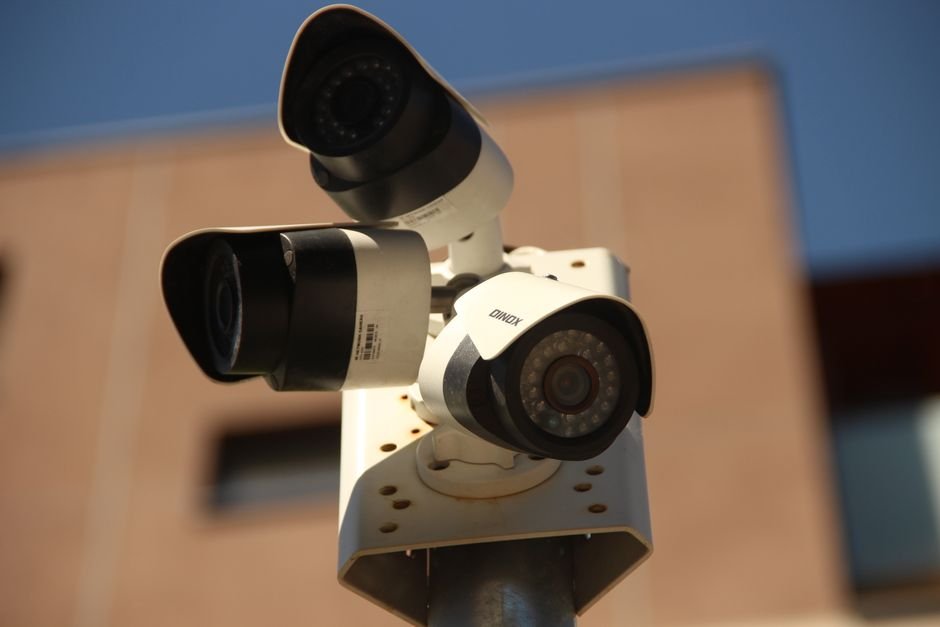
This is the single most time-sensitive part of a hit-and-run case. Most private security systems overwrite themselves. Small businesses commonly retain seven to fourteen days. Residential doorbell cameras often keep footage only as long as a subscription tier allows, sometimes 30 days, sometimes far less. Municipal traffic cameras vary enormously, and some are not recorded at all.
The practical consequence is blunt: a canvass performed in week one recovers footage that a canvass performed in week five cannot. That means walking the block, identifying every camera with a sightline to the roadway or the approach, and sending preservation requests before the systems loop. Someone has to physically do this, and it is why representation early in a hit-and-run matters more than in a routine rear-end case.
The vehicle leaves parts behind
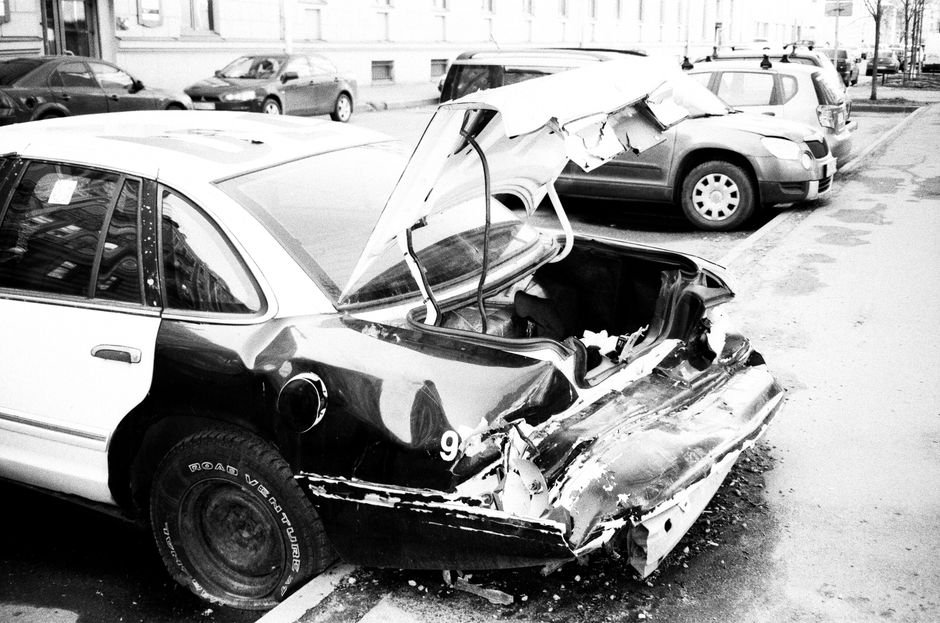
Fleeing vehicles shed evidence. Paint transfer on your vehicle can be analyzed for manufacturer color codes. Broken trim, mirror housings, grille fragments, and headlight assemblies carry molded part numbers that identify make, model, and often model-year range. A bumper fragment recovered from the scene and photographed before the street is swept can narrow a search from every car in the state to a few thousand.
Body shops in the area are the other half of that work, since a damaged vehicle eventually needs repair, and shops in many jurisdictions must report certain damage patterns.
The police report is a coverage document
Filing a police report is not just about catching the driver. Many auto policies and several state statutes condition uninsured motorist benefits on reporting a hit-and-run to law enforcement within a defined period — commonly 24 hours, sometimes 72. Miss that window and the insurer may have a contractual basis to deny the claim regardless of how badly you were hurt.
If you were transported from the scene and could not report immediately, report as soon as you are able and document why the delay occurred. That documentation becomes relevant later.
Uninsured Motorist Coverage: The Policy That Actually Pays
In most states, uninsured motorist coverage treats a hit-and-run driver as an uninsured driver. Your own policy steps into the shoes of the missing defendant, up to your UM limits. This is coverage you already paid for, and it is the primary recovery vehicle in these cases. Our sister site’s breakdown of how uninsured motorist coverage works covers the mechanics in detail.
Contact versus the phantom vehicle
There is a meaningful legal line between a crash where the fleeing vehicle physically struck you and one where it did not. A driver who forces you off the road without touching your car is often called a phantom vehicle, and many states and policies impose extra proof requirements for those claims — frequently independent corroboration, meaning a witness who is not you or a passenger in your car.
Where there was actual contact, the paint transfer and damage pattern that prove it become important not only for identification but for coverage itself.
Notice deadlines inside the policy
Separate from the police-report requirement, policies impose their own notice obligations on the insured — prompt notice of the accident, prompt notice of intent to make a UM claim, cooperation with the investigation, and submission to an examination under oath if requested. These are contract conditions. An insurer that can show prejudice from late notice has a defense that never touches the merits of your injuries.
Stacking and multiple policies
Depending on the state and policy language, UM limits on multiple vehicles in a household may stack, multiplying available coverage. A household with three insured vehicles carrying $50,000 in UM each may have $150,000 available in a stacking state and $50,000 in a non-stacking one. Resident relatives’ policies sometimes apply as well. Identifying every potentially applicable policy is basic work that frequently goes undone when people handle these claims alone.
Your Own Insurer Becomes the Opposing Party
This is the part that surprises people most. In a UM claim, the company you pay premiums to is the entity resisting the payment. Its adjuster evaluates your injuries, disputes your treatment, and controls the offer. The relationship is contractual and adversarial at the same time.
Practically, that means the recorded statement you give is a statement to an opposing party. It means the medical authorization you sign may be broader than the claim requires. It means an early offer arrives before your treatment has resolved, which is exactly when its value is hardest to assess. If your insurer denies or lowballs unreasonably, some states recognize a bad-faith claim against the carrier, but that is a separate and difficult action — not a routine remedy.
Many UM policies also require arbitration rather than a jury trial, and the arbitration provisions vary in who selects the arbitrator and whether the result is binding. That clause is worth reading before a dispute arises rather than after. The same dynamic appears whenever coverage is contested — our guide to what to do after a denied claim walks through the options.
If the Driver Is Identified Later
Identification changes the case, and it is why a hit and run accident lawyer keeps the investigation open even after opening the coverage claim. A located driver means a liability claim against their insurer, which becomes the primary source of recovery, with your UM coverage sitting behind it as underinsured motorist protection if their limits are inadequate.
Fleeing the scene is also a crime in every state, and that has civil consequences. Conduct that supports criminal charges can support a claim for punitive damages in many jurisdictions, which is unusual in ordinary negligence cases. The criminal case may also produce a restitution order, though restitution is generally limited to economic loss and does not replace a civil claim.
One caution that matters: if you have already been paid by your UM carrier, that carrier will assert subrogation rights against any later recovery from the driver. Coordinating those interests is technical work, and it is closely related to the lien and repayment problems that follow most injury settlements.
What a Hit and Run Accident Lawyer Does That You Cannot
- Sends preservation letters to camera owners, businesses, and municipal agencies before retention windows close
- Issues subpoenas once suit or arbitration is initiated, which is the only way to compel footage from an unwilling holder
- Identifies every applicable policy in the household, including stacking and resident-relative coverage
- Manages the recorded statement and examination under oath, which are contract obligations with real consequences
- Keeps the criminal case and the civil claim from interfering with each other
- Documents damages to the standard a UM arbitrator expects, which is closer to trial-level proof than a routine liability negotiation
- Coordinates the UM claim with any later liability claim so the two do not undercut each other
Where injuries are severe enough that future care is in play, a hit and run accident lawyer also has to value the claim against a coverage ceiling rather than an open-ended defendant, which is the same discipline described in our guide to catastrophic injury claims. If you are weighing whether the case justifies representation at all, the general framework in our guide on when to hire a car accident lawyer applies here, with the caveat that hit-and-run cases are more time-sensitive than ordinary collisions.
Two Different Clocks
Hit-and-run victims are running two deadlines that are frequently confused.
The first is the tort statute of limitations for a claim against the driver, if one is ever identified. That is the standard personal injury deadline in your state, commonly two or three years from the crash, and it runs whether or not you know who the defendant is.
The second is the deadline on the UM claim, which is contractual rather than tort-based. Some states apply a longer contract limitations period; many policies impose their own shorter deadline for demanding arbitration or filing suit against the insurer. These do not run together, and assuming the longer one applies to both is a common and expensive error. The general rules are covered in our overview of personal injury statutes of limitations, but the policy language controls the UM side.
Pedestrians and cyclists struck in hit-and-run collisions face the same structure with an added wrinkle: they may have UM coverage through their own auto policy even though they were not in a vehicle, and often through a resident relative’s policy. That point is developed further in our discussion of pedestrian accident claims.
Frequently Asked Questions
Will my rates go up if I make an uninsured motorist claim?
Several states prohibit surcharging a policyholder for a not-at-fault claim, including UM claims, and many insurers do not surcharge for them as a matter of practice. The rules are state-specific and the answer is not universal. The Insurance Information Institute publishes general background, but your state insurance department is the authority on what carriers may do there.
What if I do not have uninsured motorist coverage?
Some states require UM coverage; others allow written rejection. If it was rejected, look for medical payments coverage or personal injury protection on the policy, health insurance, and any resident relative’s auto policy. Whether the rejection was validly executed under state law is also worth examining, because a defective rejection can restore coverage in some jurisdictions.
How long does the police investigation usually take?
Most hit-and-run investigations close without an identification, and departments prioritize cases involving serious injury or death. Waiting for the criminal investigation to conclude before opening your UM claim is generally a mistake, because policy notice deadlines run independently of police activity.
Can I still recover if I did not get a plate number?
Yes. Most hit-and-run recoveries proceed through uninsured motorist coverage precisely because the driver was never identified. A partial plate, a vehicle description, or debris from the scene helps the investigation but is not a prerequisite to the UM claim.
Does a hit and run accident lawyer charge differently for these cases?
Fee arrangements are typically contingency-based, as in other injury cases, though costs can run higher because of the investigation. Fee terms and cost handling should be in the written agreement — the mechanics are set out in our sister site’s explainer on contingency fees.
Final Thoughts
The practical step that matters most in a hit-and-run is also the least intuitive: report to your own insurer immediately, in writing, even before you know whether you want to pursue anything. That notice preserves the coverage that will probably carry the case, and it costs nothing. The investigation can follow. The coverage, once forfeited on a notice technicality, generally does not come back.
Disclaimer
This article is general legal information and is not legal advice. Laws, deadlines, and procedures vary by state and change over time, and every case depends on its own facts. Reading this article does not create an attorney-client relationship. Consult a licensed attorney in your state about your specific situation.