This article is general legal information, not legal advice. Personal injury law varies significantly from state to state, and every case turns on its own facts. Nothing here creates an attorney-client relationship, and no outcome is promised or implied. Consult a licensed attorney in your state before making decisions about your claim.
An e-scooter accident lawyer deals with a claim that did not exist a decade ago and that most insurance policies were never drafted to address. A rider hurt on a rented scooter often discovers three things in quick succession: the rental agreement they accepted with a thumb-tap sends disputes to arbitration, their auto policy excludes the vehicle they were riding, and the data that would prove what happened belongs to the company they want to sue.
Federal injury surveillance has tracked hundreds of thousands of emergency-department visits associated with micromobility devices over the past several years, with e-scooters accounting for a rising share, and federal traffic safety data now tracks them separately from bicycles. The legal infrastructure has not caught up, which is precisely why these cases require different handling than a bicycle or motorcycle claim.
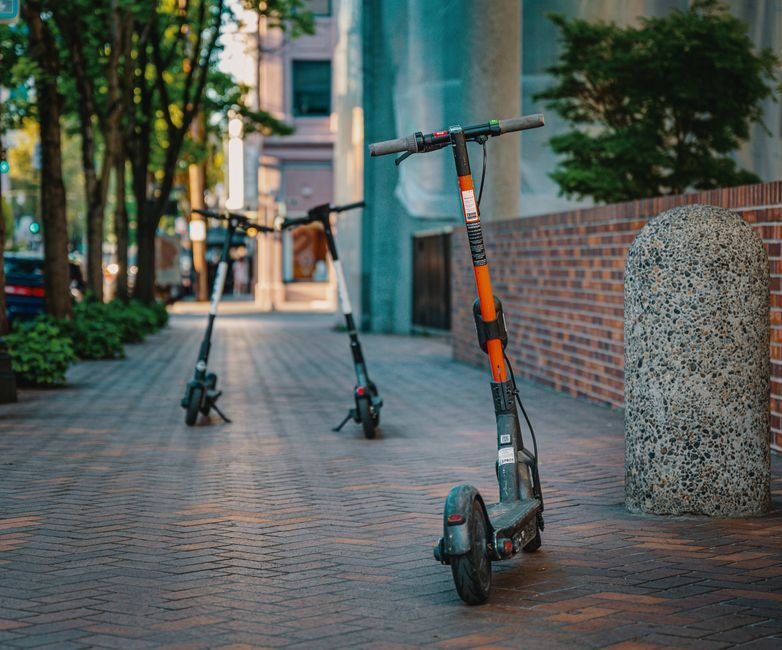
Three Cases an E-Scooter Accident Lawyer Sees
“E-scooter accident” describes at least three distinct claims, and they share almost no analysis:
- A rider struck by a motor vehicle — closest to a conventional traffic claim, with the driver’s liability insurance as the primary source of recovery
- A rider injured by the scooter itself — a mechanical failure, battery fire, or firmware behavior, which is a product and maintenance claim against the manufacturer or fleet operator
- A pedestrian struck by a scooter rider — where the defendant is an individual whose coverage, if any, comes from a homeowners or renters policy
An e-scooter accident lawyer sorts the claim into one of these before anything else, because each has a different defendant and a different clock. A fourth variant, a rider injured by a road defect such as an unmarked excavation or a broken grate, brings a government entity into the case with its own short deadlines.
The User Agreement You Accepted in Four Seconds
Every major scooter-share operator conditions use on a rental agreement accepted in the app. These agreements are long, and they are drafted to eliminate exactly the claim an injured rider wants to bring.
Mandatory arbitration and class waivers
Most contain a binding arbitration clause with a class-action waiver. Where enforced, this means no jury, no public filing, and an individual proceeding before a private arbitrator under rules the agreement specifies. Courts have generally enforced these clauses in consumer contexts, though enforceability turns on how the agreement was presented — whether the terms were reasonably conspicuous and whether the user manifested assent. A screen that buried the terms behind an unlabeled link is treated differently than one requiring an affirmative checkbox.
Liability waivers and assumption of risk
The agreements also include pre-injury releases and assumption-of-risk language. Their effect varies substantially by state. Many states refuse to enforce pre-injury waivers against claims of gross negligence or recklessness, and some void them entirely as against public policy in particular contexts. A waiver that bars an ordinary negligence claim may not bar a claim that the operator knowingly returned a scooter to service with a documented brake defect.
What generally survives
Product liability claims against a manufacturer that is not a party to the rental agreement are usually unaffected by it. So are claims against a third-party driver who struck the rider — that motorist has no contract with anyone. The agreement constrains the claim against the operator, not the whole case, and an e-scooter accident lawyer typically structures the matter around the defendants the contract does not reach. The manufacturer track follows the framework in our guide to product liability and defective products.
The Coverage Gap Every E-Scooter Accident Lawyer Checks First
This is the practical problem that surprises riders most. Standard personal auto policies exclude vehicles with fewer than four wheels, or define covered vehicles in ways that exclude scooters. That exclusion can also disable the uninsured motorist coverage a rider would otherwise rely on when struck by an uninsured driver — the coverage depends on policy language defining when UM applies to an insured injured outside a car.
Whether UM responds is genuinely policy-specific and state-specific, and it is one of the first things worth checking after a scooter crash. The general mechanics are set out in our sister site’s guide to uninsured motorist coverage.
The other layers to examine:
- Health insurance, which is usually the primary payer for treatment and will assert a reimbursement claim against any recovery
- Personal injury protection or medical payments coverage, where the policy and state definitions permit it — in no-fault states the threshold question is whether a scooter qualifies as a motor vehicle under the statute
- Homeowners or renters liability, which may cover a rider who injures a pedestrian, subject to motorized-vehicle exclusions
- The operator’s commercial policy, which typically covers the company’s own liability and does not make the rider an insured
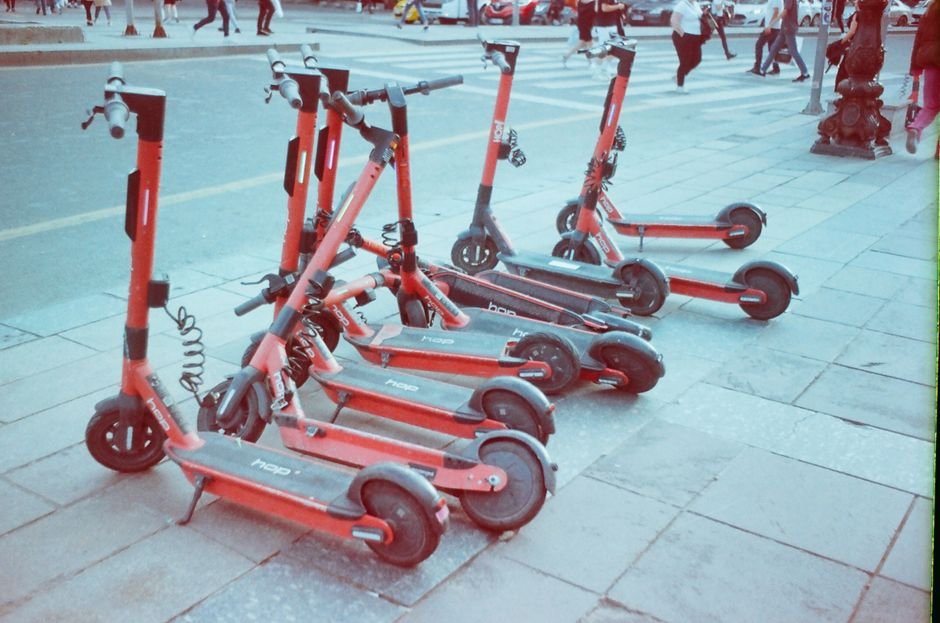
When a Car Hits a Scooter Rider
These are the highest-value scooter claims an e-scooter accident lawyer handles, and the most conventional in structure. The driver’s liability coverage responds, fault is analyzed under ordinary traffic rules, and the injuries are often severe because the rider has no structure around them and, in the overwhelming majority of cases, no helmet.
Two defenses recur. The first is that the rider was where they should not have been — riding on a sidewalk in a jurisdiction that prohibits it, riding against traffic, or crossing outside a crosswalk. Local ordinances on scooter operation vary by city, not just by state, and they get cited immediately. The second is comparative fault based on helmet non-use, which in most states does not bar recovery but may reduce damages for head injuries where the state permits the argument at all. How much a shared-fault finding costs depends on the state rule, explained in our overview of comparative negligence.
The rider-bias problem is real and familiar from two-wheeled vehicle cases generally: adjusters and jurors bring assumptions about who was behaving recklessly. The dynamic is the same one discussed in our guide to motorcycle claims and rider bias, and it is countered the same way — with independent evidence rather than argument.
When the Scooter Itself Fails
Mechanical failure claims center on evidence the operator controls, which is why an e-scooter accident lawyer moves on records before anything else. Shared scooters are maintained by field crews on a schedule, and each unit has a service history: prior damage reports, rider complaints, mechanic inspections, and decisions to return it to service. Riders report faults through the app, which means a scooter that threw someone may have had documented complaints before it did.
Scooters also generate telemetry — GPS track, speed, acceleration and braking data, throttle inputs, battery status, and ride start and end times. This data settles disputes about speed and location that would otherwise come down to conflicting testimony, and it is held on the operator’s servers subject to retention policies. A preservation demand identifying the specific unit by its visible ID number, sent within days, is what keeps it available.
The physical scooter matters too. It is generally collected by the operator and returned to the fleet or scrapped, taking the defective component with it. Photographing the unit at the scene, including its identification number, is often the only record that survives.
Suing a City Over Road Conditions
Where a pothole, an unmarked construction cut, a raised utility cover, or a defective grate caused the fall, the defendant may be a municipality or a utility. Claims against public entities almost always require a formal notice of claim within a short statutory window — commonly 60 to 180 days, and shorter in some jurisdictions — long before the general limitations period expires. Failing to serve that notice generally ends the claim regardless of its merit, which makes it the single most unforgiving deadline in this area.
Cities also impose permit conditions on scooter operators covering insurance minimums, maintenance obligations, parking rules, and incident reporting. Those permit terms are public records and can establish a duty the operator agreed to and did not meet.
If You Were the Pedestrian
Pedestrians struck by scooter riders face a different problem: the defendant is usually an individual with no commercial insurance. Recovery may depend on the rider’s homeowners or renters liability coverage, which often contains motorized-vehicle exclusions that may or may not reach a low-speed scooter. Where the rider was uninsured and without assets, the practical question becomes whether the operator bears any independent responsibility — for deploying units in a prohibited area, for example. The general analysis for pedestrian injuries is covered in our guide to pedestrian accident claims.
Frequently Asked Questions
Does the rental agreement really stop me from suing?
It typically compels arbitration of claims against the operator rather than barring them, and its enforceability depends on how the terms were presented and on state law regarding pre-injury releases. It generally does not affect claims against a driver who hit you or a manufacturer that built a defective product.
Will my car insurance cover a scooter crash?
Often not. Most personal auto policies exclude vehicles with fewer than four wheels, and that exclusion may also affect uninsured motorist coverage. The policy language and your state’s statutes control, so the declarations page and the definitions section are worth reading rather than assuming either way.
What should I do at the scene?
Photograph the scooter including its identification number, the surrounding roadway, and any defect involved. Report the incident in the app and keep the confirmation. Get witness contact information, and if a vehicle was involved, insist on a police report. The operator will recover the scooter, so photographs are frequently the only physical record.
Does not wearing a helmet ruin my claim?
In most states it does not bar recovery, though it may reduce damages attributable to head injury where the state allows the argument. Helmet requirements for adult scooter riders vary by state and city, and a violation is treated as evidence rather than an automatic defense in most jurisdictions.
How quickly do I need to act?
Faster than in a typical traffic case. Telemetry and maintenance records sit behind retention policies, the scooter itself returns to the fleet, and any claim against a city may require notice within a few months. Federal injury data compiled by the Consumer Product Safety Commission reflects how common these incidents have become, but nothing in that data preserves the evidence in your case.
Final Thoughts
If you are hurt on a rented scooter, do one thing before anything else: write down the unit identification number and screenshot your ride record in the app, including the start and end times. That number is what a preservation letter needs to identify the specific vehicle and pull its maintenance and telemetry history. Without it, the operator has a fleet of thousands of interchangeable units and no obligation to guess which one you were on.
Disclaimer
This article is general legal information and is not legal advice. Laws, deadlines, and procedures vary by state and change over time, and every case depends on its own facts. Reading this article does not create an attorney-client relationship. Consult a licensed attorney in your state about your specific situation.