This article is general legal information, not legal advice. Personal injury law varies significantly from state to state, and every case turns on its own facts. Nothing here creates an attorney-client relationship, and no outcome is promised or implied. Consult a licensed attorney in your state before making decisions about your claim.
A bus accident lawyer spends most of the first week on a new case answering one question that never comes up in an ordinary car crash: who, exactly, owns this bus? The answer decides whether you have two years to file or thirty days, whether your damages are capped by statute, whether federal safety rules apply, and whether you are one claimant against a large policy or one of forty people dividing a fixed pool. Bus claims run on different rules, and the rules are unforgiving about timing.
This guide covers the structural differences: the common-carrier duty, the split between government and private buses, how your role in the crash changes the claim, multi-claimant pools, the evidence that exists only on buses, what a lawyer does with it, and when you may not need one.

Why Bus Claims Start From a Different Legal Baseline
Most drivers owe other people “reasonable care.” A bus that carries passengers for a fare is usually a common carrier, and in most states common carriers owe their passengers a higher duty, often described as the highest degree of care consistent with the practical operation of the vehicle. The phrasing varies by state and a few states have moved back toward ordinary negligence, but where it applies, it changes how a case is argued.
In practical terms, conduct that would be excused for an ordinary driver can be negligence for a bus operator: pulling away before an elderly passenger is seated, braking hard enough to throw a standing rider into a stanchion, leaving a wheelchair unsecured. None of these involve a collision, and a large share of bus injury claims involve no second vehicle at all. The common-carrier standard is what makes those “no-crash” injuries compensable, and a bus accident lawyer will plead it specifically, because the defense will measure the driver against the ordinary standard if nobody objects.
Two limits apply. The heightened duty generally runs to passengers, not to the driver of the car the bus hit. And a rider injured by a routine stop or start often cannot recover; the question is whether the movement was unusual or violent, which is proven with onboard video and other passengers’ accounts.
Public Bus or Private Bus: The Question That Controls Everything
Government-operated buses: transit authorities and school districts
City transit systems, regional transit authorities, and public school districts are government entities protected by sovereign immunity. Every state has waived that immunity for ordinary negligence to some degree through a tort claims act, but the waiver comes with conditions:
- Notice-of-claim requirements. Before you can sue, you usually must serve a written notice on the correct agency describing the incident, the injuries, and often the amount claimed. Many states and municipalities require it within 30, 60, 90, or 180 days, and some large transit authorities have tighter rules in their enabling statutes. Missing the notice deadline typically ends the claim regardless of the general statute of limitations for injury cases in that state.
- Shortened limitations periods. The time to sue a public entity is frequently shorter than for private defendants, sometimes one year instead of two or three.
- Damage caps. Many states cap what a public entity pays, commonly $100,000 to $500,000 per person with a larger aggregate per incident. A few have no cap; a few have caps too low to compensate a serious injury.
The trap is real. Injured riders often spend months dealing with the agency’s claims office, which takes a recorded statement and requests records without mentioning that a formal notice is due. It is not obligated to warn you. By the time the rider calls a lawyer at month five, a 90-day notice period has run.
Private carriers: charter, intercity, tour, and contracted school buses
Intercity lines, charter companies, tour operators, and private companies running school routes under contract are commercial motor carriers. There is no immunity and no notice-of-claim hurdle, but a different body of law takes over:
- Federal Motor Carrier Safety Regulations. Interstate passenger carriers are regulated by the Federal Motor Carrier Safety Administration, which sets rules on driver qualification, hours of service, drug and alcohol testing, and maintenance. Violations are powerful evidence of negligence and can support a separate negligent-hiring claim against the company.
- Higher insurance minimums. Federal law requires for-hire passenger carriers with seating for 16 or more to carry at least $5 million in liability coverage, and $1.5 million for smaller vehicles. Compare that to a $25,000 minimum-limits personal auto policy.
- Layered corporate defendants. The ticket seller, the bus owner, the driver’s employer, and the shop that did the last brake job can all be different entities. That is part of why the investigation is heavier than in a standard car accident case, and much of what makes a truck accident case different applies here too.
A school district that contracts out its routes creates the messiest version: the district may be immune or capped, the contractor is not, and the contractor may argue it was acting as the government’s agent. A careful lawyer serves notice on the public entity within the short window and pursues the private contractor, rather than guessing which track applies.
Who You Are Changes the Claim: Passenger, Driver, or Pedestrian
Passengers have the cleanest liability position. Comparative fault is rarely an issue, the common-carrier duty applies, and if another vehicle caused the crash the passenger has claims against both that driver and the bus operator, who will blame each other. One wrinkle: in no-fault states, the passenger’s own PIP coverage may be primary for initial bills, and some states limit PIP for bus riders. How no-fault and PIP rules treat bus passengers is state-specific.
Drivers of other vehicles hit by a bus are in a normal negligence case against an abnormal defendant. The common-carrier standard does not apply, and comparative negligence will be contested in the usual way. The difference is resources: a transit authority has an in-house claims unit, and a private carrier’s insurer assigns experienced defense counsel immediately. Neither pays quickly.
Pedestrians and cyclists are struck by buses at stops and in crosswalks out of proportion to their numbers, largely because of front-corner blind spots. These cases combine pedestrian-claim dynamics with the ownership problem: a person struck by a city bus has the same short notice deadline as a passenger and usually does not know it.
Multiple Claimants and the Policy-Limit Pool
A car crash usually has one or two injured people. A bus crash can have forty. A private carrier’s $5 million policy is $5 million total for the crash, not per passenger. If thirty-five people are hurt and six have seven-figure injuries, the policy is exhausted before the moderate injuries are addressed. Against a public entity the problem is sharper: a statutory aggregate cap of, say, $1 million per occurrence, divided among dozens of claimants.
Insurers handle this by filing an interpleader (depositing the limits with a court and asking the judge to divide them), by negotiating a proportional global settlement, or by paying early settlements to the first claimants who present documented demands, which can drain the pool before others are ready. In practice:
- Timing matters. A claimant who presents a documented demand early is better positioned than one who waits a year to finish treatment.
- Other defendants matter more: the other driver, a maintenance contractor, a parts manufacturer, or a road authority.
- Your own underinsured motorist coverage may apply to you as a bus passenger or pedestrian and can fill the gap, depending on policy language.
- Health insurers and Medicare will claim repayment from your share, so negotiating medical liens down is part of the work.
Evidence That Exists Only on Buses, and How Fast It Disappears
Buses generate evidence that private cars do not, and nearly all of it is controlled by the defendant and overwritten on a schedule.
- Onboard cameras. Most transit and many private buses run multiple interior and exterior cameras. Retention is often 7 to 30 days before the system overwrites.
- Event data recorders and telematics. These capture speed, braking, and throttle before an impact, and some log every hard-brake event with GPS coordinates, which is how a “routine stop” becomes a measured deceleration.
- Driver records. Hours-of-service logs, the driver’s qualification file, training history, prior complaints, and post-accident drug and alcohol test results, which federal rules require for interstate carriers in defined circumstances.
- Maintenance and inspection records. Pre-trip inspection reports, work orders, brake and tire history. A brake failure case lives or dies on these.
- Incident reports, passenger “courtesy cards,” and dispatch recordings. The cards are the witness list, and what the driver told dispatch in the first minute is often the most candid account that will ever exist.
The tool for securing all of this is a preservation letter: a written demand to the carrier and its insurer identifying each category of evidence and putting them on notice that it must be kept. Once received, destroying covered evidence can support a sanction or an adverse-inference instruction at trial. It should go out the same week as the notice of claim. The broader principles are covered in the guide to evidence and documentation in injury claims, but bus cases compress the timeline.
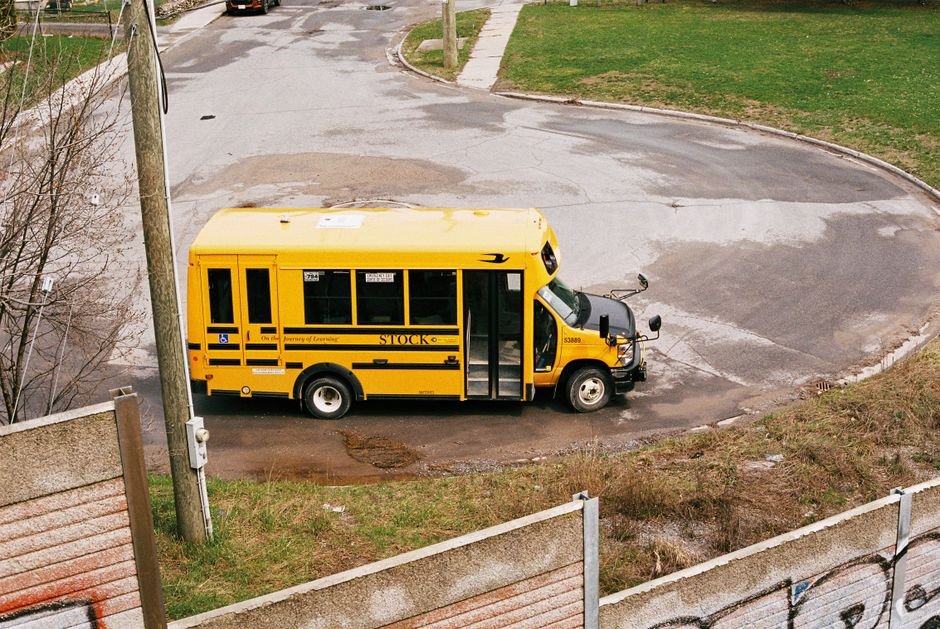
School Bus Claims Involving Children
The National Highway Traffic Safety Administration reports that school buses are among the safest vehicles on the road per mile, and that most child fatalities in school-bus-related crashes are pedestrians struck while boarding or leaving, often by vehicles passing illegally. That pattern shapes the claims:
- Loading-zone injuries usually involve a passing motorist as the primary defendant, with a secondary claim against the district or contractor for stop placement, failure to activate the stop arm, or releasing a child on the wrong side.
- Seat belt issues come up because most large school buses are not federally required to have passenger belts, though several states now mandate them on new buses. Lacking belts is generally not negligence if the bus meets applicable standards.
A minor’s statute of limitations is usually tolled until the child turns 18. The notice-of-claim deadline against a government entity often is not, or is tolled only briefly. Parents who assume they have years can lose the claim against the district entirely.
What a Bus Accident Lawyer Actually Does in These Cases
Beyond the work common to every injury case, the bus-specific tasks run roughly in this order:
- Identify every owner and operator through the registration, the carrier’s USDOT number, the agency’s enabling statute, and any district-contractor agreements, in the first days rather than after treatment ends.
- Calendar every deadline and serve notice on every plausible public entity, because an unnecessary notice costs nothing and a missed one costs the case.
- Send preservation letters to the carrier, the insurer, and third parties holding footage, such as a nearby business or city traffic camera program.
- Pull public records under state open-records law: the incident report, the driver’s complaint history, the route’s incident history, and the maintenance file. Much of this is available without a lawsuit.
- Retain experts: a heavy-vehicle reconstructionist, and a motor-carrier compliance expert for FMCSA cases.
- Position the claim within the pool in a multi-claimant case, including monitoring for interpleader filings.
- Work every other coverage source and negotiate the liens that follow.
These cases are almost always handled on a contingency fee, so the cost of experts and records is carried by the firm and repaid from any recovery. For vetting a lawyer’s experience with heavy-vehicle and government-entity cases, the complete guide to choosing a personal injury attorney covers the questions worth asking.
When You May Not Need a Bus Accident Lawyer
A self-handled claim is realistic when all of the following are true:
- The injury is minor, fully resolved, and documented with a small, known set of medical bills.
- Liability is clear and admitted, such as a private carrier’s insurer accepting responsibility in writing.
- There is no government entity involved, or you have confirmed the notice requirement and served a compliant notice yourself within the deadline.
- There are few other claimants, so there is no pool-allocation problem.
When any of those fails, particularly the government-entity condition, the downside of going alone is not a smaller settlement but possibly no claim at all. A single consultation to confirm the correct defendant and deadlines is worth doing within two weeks of any transit or school bus incident.
Frequently Asked Questions
How long do I have to file a claim against a city bus?
It depends on the state and sometimes the specific authority, but the notice-of-claim deadline is often 30 to 180 days, and the deadline to file suit after that is frequently one year. Both are separate from, and shorter than, the general injury statute of limitations. Confirm the exact rule for the agency involved within the first few weeks.
What if there were dozens of injured passengers?
All claimants share the carrier’s per-occurrence limit or the public entity’s aggregate cap. If total damages exceed the money, the insurer may interplead the funds or negotiate a proportional division. Presenting a documented claim early, pursuing other responsible parties, and checking your own underinsured motorist coverage protect your share.
Does the school district’s insurance cover my child’s injuries on a school bus?
Districts are usually self-insured or in a government risk pool and are subject to the tort claims act, including notice deadlines and damage caps. If a private contractor ran the route, its commercial policy is also available and is not capped. Act on the government notice immediately even though the child’s general statute of limitations is years away.
Will the bus company’s cameras help my case?
Usually, if the footage still exists. Many systems overwrite within 7 to 30 days. A written preservation demand to the carrier and its insurer is the only reliable way to stop the overwrite, and once received, destruction of the footage can be held against the carrier in court.
Final Thoughts
If you were injured on or by a bus, find out today whether the bus was operated by a government entity, and if it was, locate the notice-of-claim rule that applies to it. That single step, taken in the first week rather than the fifth month, preserves more value in a bus claim than anything else you can do.
Disclaimer
This article is general legal information and is not legal advice. Laws, deadlines, and procedures vary by state and change over time, and every case depends on its own facts. Reading this article does not create an attorney-client relationship. Consult a licensed attorney in your state about your specific situation.