This article is general legal information, not legal advice. Personal injury law varies significantly from state to state, and every case turns on its own facts. Nothing here creates an attorney-client relationship, and no outcome is promised or implied. Consult a licensed attorney in your state before making decisions about your claim.
A dental malpractice lawyer handles a claim that is legally identical to a medical malpractice case and economically very different from one. The elements are the same, the expert requirements are the same, and the procedural hurdles are the same — but the damages in a typical dental case are a fraction of those in a surgical case, while the cost of proving liability is nearly as high. That mismatch, more than anything about the law, determines which dental injuries produce viable claims.
Understanding where that line falls saves people months. A crown that failed twice and a permanent nerve injury from a wisdom tooth extraction are both real harms. Only one of them reliably supports litigation.

The Four Elements, and Where Dental Cases Fail
Like any professional negligence claim, a case a dental malpractice lawyer agrees to bring requires four things: a dentist-patient relationship creating a duty; a breach of the applicable standard of care; causation linking the breach to the harm; and damages. The general framework is the same one described in our guide to medical malpractice claims.
Two elements do most of the killing. The first is breach. A bad outcome is not malpractice. Implants fail, root canals sometimes need retreatment, and some complications occur at a known rate even with flawless technique. The question is not whether the result was poor but whether the care fell below what a reasonably prudent practitioner would have done — and for a specialist, the standard is measured against that specialty.
The second is causation, which in dental cases is frequently the harder element. A patient with advanced periodontal disease who loses teeth after years of inadequate treatment must show the loss resulted from the dentist’s failures rather than from the underlying disease, home care, smoking, or diabetes. Defense experts have a substantial evidentiary base to work with in most of these files.
The duty element carries a nuance worth understanding. A general dentist is measured against what a reasonably prudent general dentist would do, which includes recognizing the limits of general practice. A significant share of dental claims turn not on a botched procedure but on a failure to refer — a general dentist attempting a surgical extraction, an implant placement, or a complex endodontic case that the standard of care required sending to an oral surgeon, periodontist, or endodontist. Once a practitioner undertakes work within a specialty, courts in many states measure that work against the specialist standard rather than the general one, which raises the bar considerably on the procedure they chose to keep in house.
The Injuries That Actually Support a Case
Permanent nerve injury
The most common serious dental malpractice claim involves damage to the inferior alveolar nerve or the lingual nerve, usually during third-molar extraction or implant placement. The result can be permanent numbness, altered sensation, or chronic pain in the lip, chin, or tongue — affecting speech, eating, and quality of life indefinitely.
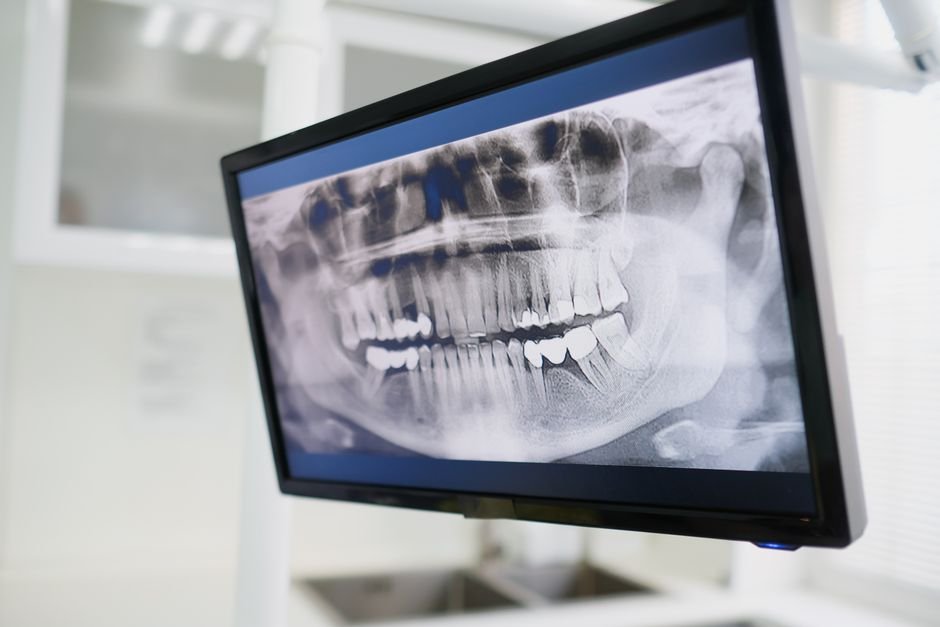
These cases turn on imaging. Where a panoramic film or cone-beam CT showed the tooth root in close relationship to the nerve canal and the practitioner proceeded without referral, additional imaging, or a modified technique, the breach argument is concrete. Where an implant was placed at a depth the pre-operative imaging did not support, the same is true. The radiograph is the objective record.
Failure to diagnose oral cancer
This is the highest-severity dental claim. Dentists examine the oral cavity more regularly than any other provider, and screening for suspicious lesions is part of a routine examination. A lesion documented in the chart across multiple visits without biopsy or referral, followed by a later diagnosis at an advanced stage, presents a delayed-diagnosis claim with damages comparable to any oncology malpractice case. The CDC’s oral health resources describe the screening context.
Anesthesia and sedation complications
Sedation-related injuries, particularly in pediatric dentistry, are rare and catastrophic. These claims examine the sedation permit level, monitoring equipment used, staff training and emergency preparedness, dosing relative to weight, and the response when the patient deteriorated. When a sedation case results in death, it proceeds as a wrongful death claim with the same expert requirements.
Wrong-site and restorative failures
Extraction of the wrong tooth is the clearest breach in dentistry and needs little expert explanation. Perforated roots, separated instruments left in a canal, untreated infection that progresses to a deep space infection requiring hospitalization, and implants placed into the maxillary sinus all fall into a category where the deviation is demonstrable. Ordinary restorative disappointment — a crown that does not fit well, a bridge replaced early — generally does not.
Why a Dental Malpractice Lawyer Turns Down Valid Cases
This is the part patients are rarely told directly. A dental malpractice lawyer working on contingency must front the litigation costs, and in a malpractice case those costs are dominated by experts. Retaining a qualified dentist or oral surgeon to review records, produce a written opinion, sit for deposition, and testify at trial routinely runs into the tens of thousands of dollars. Add records retrieval, a life-care or economic analysis where future treatment is involved, and court costs, and the investment before any recovery is substantial.
Against that, the damages in most dental cases are modest. Corrective treatment for a failed restoration may cost a few thousand dollars. There is typically no lost income and no permanent impairment. The arithmetic simply does not work, and competent lawyers decline these cases not because the patient was treated well but because litigation would cost more than it could recover.
Cases that clear the threshold generally involve permanent injury, disfigurement, significant pain, a substantial future treatment plan, or death — the same severity screen applied across serious injury practice, described in our complete guide to choosing a personal injury attorney. This is also why fee structure and cost handling matter so much here — the mechanics are set out in our sister site’s explainer on contingency fees and what you actually pay.
The Expert a Dental Malpractice Lawyer Cannot Proceed Without
Most states require a malpractice plaintiff to file, at or near the outset, an affidavit or certificate of merit from a qualified expert attesting that the care fell below the standard. Requirements vary: some states demand the expert practice in the same specialty, some impose active-practice or teaching requirements, and some require the certificate before the complaint is served.
Finding that expert is harder in dentistry than in medicine. The community is smaller, practitioners are often geographically concentrated, and willingness to testify against a local colleague is limited. Many states also apply damages caps to dental claims as part of their general medical malpractice statutes, which further compresses the economics.
Some states also require a pre-suit notice period or mandatory screening panel before filing. These are procedural traps with hard deadlines, and they run alongside the standard limitations period discussed in our overview of personal injury statutes of limitations. Medical malpractice deadlines are frequently shorter than ordinary negligence deadlines, and a discovery rule or continuous-treatment doctrine may adjust when the clock starts.
Records: The Radiographs Are the Case
Patients are entitled to their dental records, and requesting a complete copy early is the most useful independent step available. A complete set means more than the narrative chart.
- All radiographs — periapical, bitewing, panoramic, and any cone-beam CT volumes, requested in original digital format rather than as printed images
- The full treatment chart including clinical notes for every visit, not just the visits at issue
- Signed informed consent forms, which support a separate legal theory where a known risk was never disclosed
- Referral letters, or their absence, which is often the point
- Prescription and sedation records, including monitoring logs
- Billing and treatment plan documents, which sometimes show recommended work that was never performed
Imaging is decisive because it is contemporaneous and objective. A pre-operative film and a post-operative film, read by a qualified expert, frequently resolve the breach question without any dispute about what was said in the chair.
Consent-to-Settle Clauses and the Corporate Question
Two structural features shape how these cases resolve. Many dental professional liability policies contain a consent-to-settle clause, meaning the insurer cannot settle without the dentist’s agreement. Dentists frequently withhold consent, because settlements are reported to the National Practitioner Data Bank and to state licensing boards. The result is that dental cases proceed further into litigation than the underlying facts would otherwise justify.
The second is the growth of corporate dental practices operating under management organizations. Where a practice is corporately owned, additional theories may exist — vicarious liability for the treating dentist, and in some cases direct claims regarding staffing, supervision of assistants, or production incentives that influenced clinical decisions. Identifying the true ownership structure early affects who is named and what insurance is available.
Frequently Asked Questions
Is a dental board complaint the same as a malpractice case?
No. A board complaint is a licensing matter that can result in discipline but does not compensate the patient, and boards do not award damages. The two proceed independently. Board records and any resulting findings may be obtainable and relevant, but filing a complaint is not a substitute for a claim.
How long do I have to file a dental malpractice claim?
Medical malpractice limitations periods are state-specific and often shorter than general negligence deadlines, sometimes one to three years, with a discovery rule for injuries not immediately apparent and a separate outer limit called a statute of repose in many states. Pre-suit notice requirements may effectively shorten the practical window further.
My dentist did not warn me about the nerve risk. Is that a case?
Lack of informed consent is a distinct theory from negligent treatment. It requires showing that a material risk was not disclosed and that a reasonable patient — or in some states, this patient — would have declined the procedure had it been disclosed. It is often pleaded alongside a negligence claim rather than instead of one.
What if I still owe the dentist money for the treatment?
An outstanding balance does not bar a claim, and a collection action does not resolve the malpractice question. Do not sign a release in exchange for a balance write-off without understanding its scope, since a broad release can extinguish the injury claim entirely.
Will a dental malpractice lawyer review my case for free?
Initial case review is customarily free in injury practice. Expect a screening conversation focused on injury severity and permanence, because that is what determines viability. A declination frequently reflects the cost structure described above rather than a judgment that the care was appropriate.
Final Thoughts
Request your complete dental records, including original-format radiographs, from every provider involved — the treating dentist, any specialist, and whoever performed corrective work. Do it in writing and keep the request. Records are the one thing that becomes harder to obtain over time and impossible to reconstruct later, and no meaningful evaluation of a dental claim can happen without them.
Disclaimer
This article is general legal information and is not legal advice. Laws, deadlines, and procedures vary by state and change over time, and every case depends on its own facts. Reading this article does not create an attorney-client relationship. Consult a licensed attorney in your state about your specific situation.