This article is general legal information, not legal advice. Personal injury law varies significantly from state to state, and every case turns on its own facts. Nothing here creates an attorney-client relationship, and no outcome is promised or implied. Consult a licensed attorney in your state before making decisions about your claim.
An elevator accident lawyer works a case that looks like an ordinary premises claim and is not one. When someone trips at a mis-leveled elevator threshold or gets struck by closing doors, the building owner is rarely the only defendant, the machine’s service history is usually the entire case, and the physical evidence is often destroyed by the repair that follows the injury.
Elevators and escalators send tens of thousands of people to emergency departments in the United States each year. Most of those incidents produce no claim, because the injured person assumes a stumble at a door was their own fault. A meaningful share of them trace to a maintenance failure that a service log would have shown.
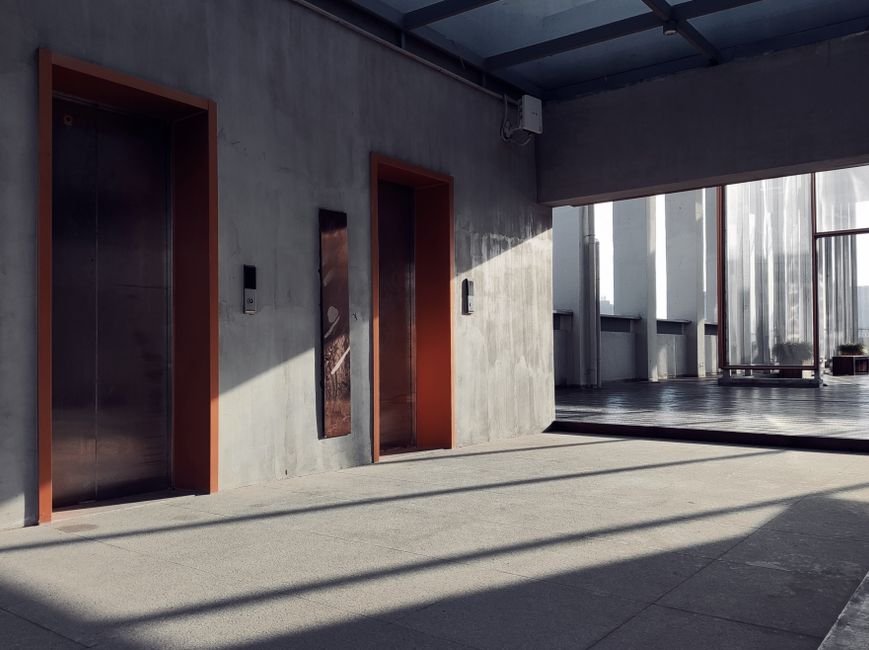
Who Actually Gets Sued in an Elevator Accident Case
The defendant list is longer than in a standard slip-and-fall, and identifying it early matters because each defendant holds different records.
- The property owner, who owes visitors a duty of reasonable care and is generally non-delegable in many states for the safety of equipment serving the public
- The maintenance contractor, an independent company under a written service contract, which is often the primary target
- The manufacturer, where a design or component defect caused the failure, which converts part of the case into a product claim
- The installer or modernization contractor, where recent work preceded the failure
- A property manager or management company with contractual responsibility for inspections and repair scheduling
- A municipal or public entity, where the equipment is in a government building or transit station, which triggers short notice-of-claim deadlines
Where a component failed rather than a service obligation, the analysis overlaps substantially with our guide to product liability and defective products.
The common carrier question
A number of states treat elevator owners and operators as common carriers, the same category as buses and trains, on the reasoning that a passenger surrenders control of their safety to the operator for the duration of the ride. Where that rule applies, the defendant is held to the highest degree of care rather than ordinary reasonable care, which is a materially easier standard for an injured plaintiff to meet. Other states apply ordinary negligence principles and reject the analogy. Escalators are treated inconsistently even within states that apply the doctrine to elevators, since riders retain more control of their own movement.
Whether the jurisdiction applies a heightened standard is one of the first questions an elevator accident lawyer answers, because it shapes the theory of the case and the jury instruction the case will eventually be tried under.
The Maintenance Contract Decides the Case
The most consequential document an elevator accident lawyer obtains is the service agreement between the building and the maintenance company. These contracts are not standardized, and their scope varies enormously.
A full-service or comprehensive contract obligates the contractor to inspect, adjust, repair, and replace components on a defined schedule, and it creates a broad duty that failure-to-maintain claims attach to directly. At the other end, a limited or “oil and grease” contract obligates the contractor to do little beyond lubrication and basic examination, leaving repair decisions and costs with the owner. In that second scenario, a building that deferred a recommended repair to save money is the responsible party, and the contractor’s own written recommendation becomes the proof.
The contract also usually contains indemnification and limitation-of-liability provisions between the defendants. Those clauses do not bind the injured person, but they drive how the defendants behave toward each other, and they explain why one defendant sometimes cooperates in proving another’s fault.
Res Ipsa Loquitur: The Doctrine Built for These Machines
Elevator cases are the textbook setting for res ipsa loquitur — the rule permitting an inference of negligence where the injury is of a kind that does not ordinarily occur without negligence, the instrumentality was under the defendant’s exclusive control, and the plaintiff did not contribute to it.
Passengers cannot see inside the hoistway, cannot inspect the controller, and have no way to know why a car dropped or a door failed to retract. Courts have long recognized that placing the full burden of explaining a mechanical failure on the passenger is unrealistic. Where the doctrine applies, it can shift the practical burden to the defendants to explain what happened.
It is not automatic. Exclusive control becomes contested when multiple parties serviced the equipment, and any evidence that the injured person was misusing the equipment — forcing doors, jumping on an escalator, overloading a car — undercuts it. Comparative fault still applies, and how much it reduces a recovery depends on the state’s rule, explained in our sister site’s overview of comparative negligence and shared fault.

How These Machines Fail, and What an Elevator Accident Lawyer Looks For
Mis-leveling
The most common elevator injury is not a plunge; it is a trip. When a car stops even an inch or two above or below the floor, a passenger stepping out catches a toe on the sill. Mis-leveling generally indicates a control or drive problem — worn brake components, failing leveling sensors, or hydraulic fluid issues — and it recurs before it injures anyone. That recurrence is exactly what the service records show.
Doors
Doors are protected by re-opening devices: mechanical safety edges on older equipment and infrared curtains on modern installations. When those devices fail or are disabled, doors close on passengers with real force. Repeated service calls for door faults are among the most common findings in these files.
Escalators
Escalator injuries follow their own patterns, and federal injury surveillance published by the Consumer Product Safety Commission tracks them as a distinct category: entrapment at the comb plate where steps meet the landing, gaps between steps and skirt panels catching shoes or clothing, missing or broken comb teeth, handrails running at a different speed than the steps, and sudden unintended stops that throw riders forward. Children and older adults are disproportionately represented, and the injuries — degloving, fractures, head trauma from a fall down moving steps — are frequently severe.
Entrapment and free fall
Uncontrolled descent is rare because of governor and safety-brake systems, but entrapment is not. Prolonged entrapment claims often involve failure of the emergency phone or alarm, delayed rescue response, and in some jurisdictions psychological injury claims that require careful proof.
The Evidence an Elevator Accident Lawyer Loses to the Repair
After an incident, the equipment gets fixed. Parts are swapped and discarded, fault codes are cleared, and the physical condition that caused the injury ceases to exist — often within days, and usually before anyone has photographed it.
The records that matter are held by the defendants and are not voluntarily produced:
- Maintenance logs showing scheduled service actually performed, and by whom
- Callback records — unscheduled service calls, which are the single best proof of notice when the same fault recurs
- Controller event logs and remote monitoring data, which timestamp faults and can be overwritten
- State or municipal inspection certificates and violation history, some of which are public
- Building security video, subject to short retention cycles
- Work orders, parts invoices, and repair recommendations the contractor made and the owner declined
A written preservation demand sent immediately — covering the equipment itself, replaced components, electronic logs, and video — is the step that keeps a spoliation argument available if the evidence disappears anyway.
Building Codes and Inspection Records
Elevator and escalator safety is governed principally by the ASME A17.1 safety code, adopted by reference in most state and municipal codes, with A17.3 addressing existing installations. Jurisdictions require periodic inspection and post a current certificate in or near the equipment.
A code violation does not automatically establish liability, but in many states an unexcused violation of a safety regulation is evidence of negligence and in some circumstances negligence per se. Expired certificates, open violations, and deferred modernization on equipment decades past its service life are all findable in public records, and they change the tenor of a case considerably. The general framework for proving a property owner knew or should have known about a hazard is the same one described in our guide to slip and fall and premises liability claims.
If You Were Working When It Happened
Elevator mechanics, building engineers, delivery workers, and cleaning staff injured on this equipment face a two-track situation. Workers’ compensation is generally the exclusive remedy against the employer, but a third-party claim against another responsible party — the maintenance contractor if the employer is the building, or the building if the employer is the service company — remains available and carries full tort damages. The interaction between the two, including the compensation lien on any third-party recovery, is covered in our guide to workplace injury claims. Federal workplace safety records available through OSHA can also document prior incidents at the same site.
Frequently Asked Questions
Do I have a case if I only tripped at the door?
Possibly. Mis-leveling is a maintenance defect, not an ordinary floor hazard, and the service history frequently shows the same fault reported before. The injury severity determines whether a claim is economically worth pursuing, but the mechanism itself is a recognized basis for liability.
Can I sue the maintenance company if I have no contract with them?
Yes. A contractor that undertakes to maintain equipment owes a duty of reasonable care to foreseeable users, not only to the party that hired it. The precise formulation varies by state, but the absence of a contract with the injured person is not a defense in most jurisdictions.
How does an elevator accident lawyer prove the company knew about the problem?
Callback records. Unscheduled service calls for the same fault, repeated over weeks or months, establish that the defendants had actual notice and did not correct the condition. This is why obtaining the full service file, not just the log for the incident date, is essential.
What if the building is government-owned?
Claims against public entities usually require a formal notice of claim within a short window — often 60 to 180 days, sometimes less — well before the general statute of limitations. Missing that notice generally bars the claim entirely. The broader deadline picture is covered in our sister site’s guide to statutes of limitations.
Are escalator cases handled differently?
The legal framework is the same, but the failure analysis differs and the defect is often in clearances, comb plates, or step-band condition rather than controls. Escalator cases also raise design questions more often, which brings the manufacturer into the case.
Final Thoughts
If you were hurt on an elevator or escalator, photograph the equipment before you leave — the car interior, the threshold and the gap, the equipment identification number, and the posted inspection certificate with its date. Report it to building management and ask for a written incident report. Those two minutes preserve the only evidence that will still exist by the time anyone examines the claim.
Disclaimer
This article is general legal information and is not legal advice. Laws, deadlines, and procedures vary by state and change over time, and every case depends on its own facts. Reading this article does not create an attorney-client relationship. Consult a licensed attorney in your state about your specific situation.